 When embroidery stitches are sewn, the needle tends to pull fabric inwards. This can cause:
When embroidery stitches are sewn, the needle tends to pull fabric inwards. This can cause:
3Fabric puckering
3Small gaps between shapes
3Distorted outlines
To counteract this, ‘pull compensation’ makes stitches extend slightly beyond the outline of objects. This ‘overstitching’ helps keep shapes neat and filled, even on stretchy fabrics.
Previously, Pull Compensation applied the same value to both sides of a shape. Now, you can set different values for each side of an object.
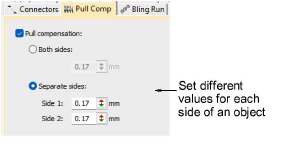
With twin-sided Pull Compensation, you now have greater control over embroidery quality and can achieve more reliable, polished stitch results. By setting separate compensation values for Side 1 and Side 2, you can avoid gaps, overlaps, and uneven stitch quality.
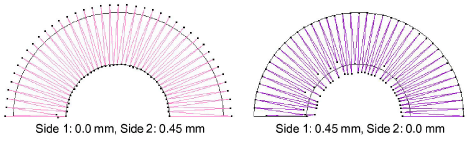
Twin-sided Pull Comp is especially helpful when:
3One side of an object sits directly on the fabric. This tends to pull in more.
3The other side sits on top of an embroidery fill, which pulls less.
3More precision: Compensate exactly where needed, depending on fabric vs embroidery overlap.
3Professional results: Avoid unwanted gaps or bulges in your design.
3Confidence: Know your design will stitch out as intended, without tedious manual adjustments.
Products
EmbroideryStudio Add-ons
Solutions
Learning
Support
Connect
About Wilcom